
We started with a big question: How do we improve patient care?
Our answer: better training.
That answer became a company. Here's how.
We're surgeons. We spent years training on models that looked the part but didn't feel it. The silicone was too stiff, the anatomy generic. The tissue planes, the layers that matter most in surgery? Missing entirely.
So we started building our own.
First in a university lab, then a workshop, now a company. Every Makemedical simulator starts with a real patient scan: CT or MRI data from actual anatomy. We 3D-print the internal structures and cast everything in specialty silicone. The goal: when a surgeon picks up a Makemedical sim, they forget it's a model.
We're not the biggest company in simulation. We're not trying to be. We're a small team of surgeons, engineers, and educators who believe realistic training changes outcomes, and it should be available everywhere, not just well-funded teaching hospitals.
The Team

Glenn is a professor of otolaryngology at the University of Michigan and co-inventor of a 3D-printed tracheal splint that saved an infant's life. With 50+ publications in journals like NEJM and JAMA, he brings decades of clinical innovation to everything we build.

David designs our simulators and tests them in the field. An assistant professor at U-M in both otolaryngology and biomedical engineering, he's delivered training tools to surgeons in seven countries and counting.

Payton is a clinical assistant professor in OB/GYN at U-M who has won national awards for her work in surgical simulation. She co-founded Fundamentals of Vaginal Surgery (FVS) and co-directs surgical training for U-M's OB/GYN residency.

Deb has spent 25+ years in medical education and simulation. She co-founded Fundamentals of Vaginal Surgery (FVS), founded the 3D Innovations Lab at U-M, and directs education and research at Michigan Medicine's Clinical Simulation Center.

Kyle is an assistant professor of otolaryngology at Ohio State with 20+ publications. He's played a key role in groundbreaking applications of 3D printing for both diagnostic and surgical use.
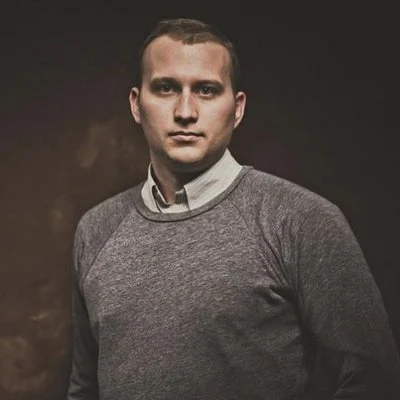
Owen founded Michigan's first retail 3D printing company before joining Makemedical. He's spent 7+ years turning complex medical technology into products that actually ship, managing everything from production to customer relationships.
We're proud to work alongside organizations that share our mission of expanding access to quality surgical training worldwide.